104- Automotive CAN BUS Diagnostic Online Course: Complete Network Diagnostic Training
Automotive CAN-BUS Diagnostic Training Course
Automotive Network | High-Speed and Low-Speed CAN BUS Practical Diagnosis Course
Course Instructor
MechanicourseAuthor
Lifetime
SALE$69.90$42.90
Course Information:
CAN Bus Online Course Includes:
About 3 Hours On-Demand Video
Full Life-time Access
Hands-on practical lessons
Presented by Dealerships Master Technicians
Extensive information on wiring diagrams.
Diagnostic with multimeter and Oscilloscope.
Certificate of Completion (After Watching each lecture, please mark the video as “Completed” to get the certificate of completion after completing all videos.
Any question regarding this course? Let us know: Training@Mechanicourse.com
Course Introduction
Course Description
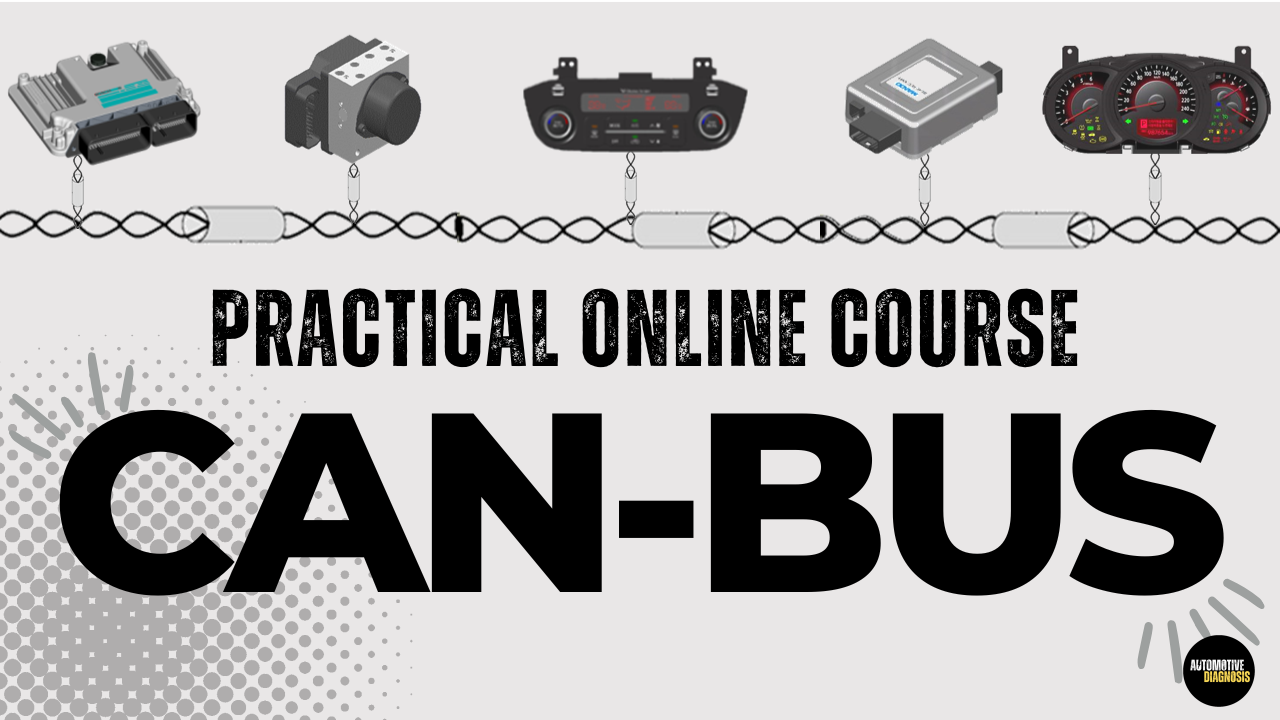
This course covers everything about CAN BUS network in vehicles.
We start by taking about the importance of having a network in vehicles and how network can increase the efficiency and reliability of electrical systems.
After introduction, we walk together through the configuration of the network and different rating and classes of network.
Then we continue by introducing the high-speed CAN, the configuration and characteristics of this network. Wiring diagram analysis and finding the network on the car are part of this section as well. We do a lot of practical activities on the car to see how we can check the CAN bus voltage and resistance with a multimeter.
We also see how to set up an oscilloscope to read and analyze the CAN-BUS waveform.
Checking the low-speed CAN is also an important part of this lecture.
In any step, we will see the procedure to do the diagnosis and we will have some simulated faults too.
Performing the diagnosis in case of having CAN-BUS time-out, CAN-BUS Error or CAN-BUS off is included in this course.
After attending this course you will be able to:
– Explain why we need a network and how a network works
– Explain the configuration and classes of the network in vehicles
– Explain what CAN-BUS is, and how it works
– Explain the high-speed and low-speed CAN
– Explain how to find the control units connected to each network
– Use the wiring diagrams to locate the CAN-BUS wires on the wiring harness
– Test the high-speed and low-speed networks voltage with multimeter
– Test the high-speed networks resistance with multimeter
– Test the high-speed and low-speed networks waveform with an oscilloscope
– Explain how network reacts if there is a fault
– Explain what CAN-BUS Time-out is
– Explain what CAN-BUS Error is
– Explain what CAN-BUS Off is
– Explain the step-by-step diagnosis when there is “no communication” fault
– Explain the role of the gateway in the network
Introduction
Learning Objectives
Lesson 1 of 5 within section Introduction.You must enroll in this course to access course content.
0
Network Introduction
Lesson 2 of 5 within section Introduction.You must enroll in this course to access course content.
0
Network Configuration
Lesson 3 of 5 within section Introduction.You must enroll in this course to access course content.
0
What is Controller Area Network (CAN-BUS)?
Lesson 4 of 5 within section Introduction.You must enroll in this course to access course content.
0
CAN-BUS Data Frame
Lesson 5 of 5 within section Introduction.You must enroll in this course to access course content.
0
High-Speed CAN-BUS
High-Speed CAN-BUS Introduction
Lesson 1 of 8 within section High-Speed CAN-BUS.You must enroll in this course to access course content.
0
CAN-BUS Wiring Diagram Analysis
Lesson 2 of 8 within section High-Speed CAN-BUS.You must enroll in this course to access course content.
0
Practical Training: Finding the High-Speed CAN-BUS on the car
Lesson 3 of 8 within section High-Speed CAN-BUS.You must enroll in this course to access course content.
0
Terminating Resistors Introduction
Lesson 4 of 8 within section High-Speed CAN-BUS.You must enroll in this course to access course content.
Lesson 5 of 8 within section High-Speed CAN-BUS.You must enroll in this course to access course content.
0
Effect of a bad terminating resistor on CAN-BUS resistance
Lesson 6 of 8 within section High-Speed CAN-BUS.You must enroll in this course to access course content.
0
[Practical Training] What voltage should we expect on High-Speed CAN-BUS?
Lesson 7 of 8 within section High-Speed CAN-BUS.You must enroll in this course to access course content.
0
[Practical Training] High-Speed CAN-BUS waveform analysis with oscilloscope
Lesson 8 of 8 within section High-Speed CAN-BUS.You must enroll in this course to access course content.
0
High-Speed CAN-BUS Diagnosis
[Practical Training] CAN Time-out Fault Introduction and Practical Inspection (CAN Time Out Between ECM & ABS)
Lesson 1 of 3 within section High-Speed CAN-BUS Diagnosis.You must enroll in this course to access course content.
0
[Practical Training] CAN-Bus Error Introduction and Practical Inspection (CAN Communication Error Instrument Cluster)
Lesson 2 of 3 within section High-Speed CAN-BUS Diagnosis.You must enroll in this course to access course content.
0
[Practical Training] CAN-BUS Off Diagnosis
Lesson 3 of 3 within section High-Speed CAN-BUS Diagnosis.You must enroll in this course to access course content.
0
Low-Speed CAN-BUS
[Practical Training] Low Speed CAN Bus Introduction, Wiring Diagram and Finding Low-Speed CAN-BUS Network on the car
Lesson 1 of 3 within section Low-Speed CAN-BUS.You must enroll in this course to access course content.
0
[Practical Training] Low-Speed CAN-BUS Voltage Introduction and Inspection
Lesson 2 of 3 within section Low-Speed CAN-BUS.You must enroll in this course to access course content.
0
[Practical Training] Low-Speed CAN-BUS Waveform Analysis with an Oscilloscope (Exploring the Normal & Abnormal Waveforms on the Car)
Lesson 3 of 3 within section Low-Speed CAN-BUS.You must enroll in this course to access course content.
0
Ford High-Speed & Medium-Speed CAN-BUS
Ford High-Speed & Medium-Speed CAN-BUS Introduction
Lesson 1 of 3 within section Ford High-Speed & Medium-Speed CAN-BUS.You must enroll in this course to access course content.
0
Ford CAN-BUS Diagnostic with a Multimeter (Resistance & Voltage)
Lesson 2 of 3 within section Ford High-Speed & Medium-Speed CAN-BUS.You must enroll in this course to access course content.
0
Ford CAN-BUS Diagnostic with an Oscilloscope
Lesson 3 of 3 within section Ford High-Speed & Medium-Speed CAN-BUS.You must enroll in this course to access course content.
0
CAN-BUS Gateway
[Practical Training] Network Gateway
Lesson 1 of 1 within section CAN-BUS Gateway.You must enroll in this course to access course content.
0
Additional Information Needed for This Course
How to Set up an Oscilloscope to Read the Waveforms
Lesson 1 of 1 within section Additional Information Needed for This Course.You must enroll in this course to access course content.
0
FAQs
Q: Can I learn CAN-BUS diagnostics online?
A: Yes. This course teaches everything from basics to advanced waveform analysis on real cars. We use real wiring diagrams to identify the CAN-Bus wiring on the car and several practical lessons will help you to understand the real diagnostic on the network.

Q: How long does the CAN-BUS course take?
A: Approximately 3 hours of video content, but you have lifetime access.

Q: What tools do I need for CAN-BUS diagnostics?
A: A multimeter, oscilloscope, and scan tool. Our course shows you how to use each.

Q: Is this course useful for beginners too?
A: Yes. We cover both high-speed and low-speed CAN-BUS for all skill levels.

Q: Do you teach how to diagnose the CAN-BUS with oscilloscope too?
A: Yes, we have covered diagnostics on the High-Speed and Low-Speed CAN-Bus using oscilloscope to explain how to read the waveforms, how to analyze them and how to use them for actual diagnostics.
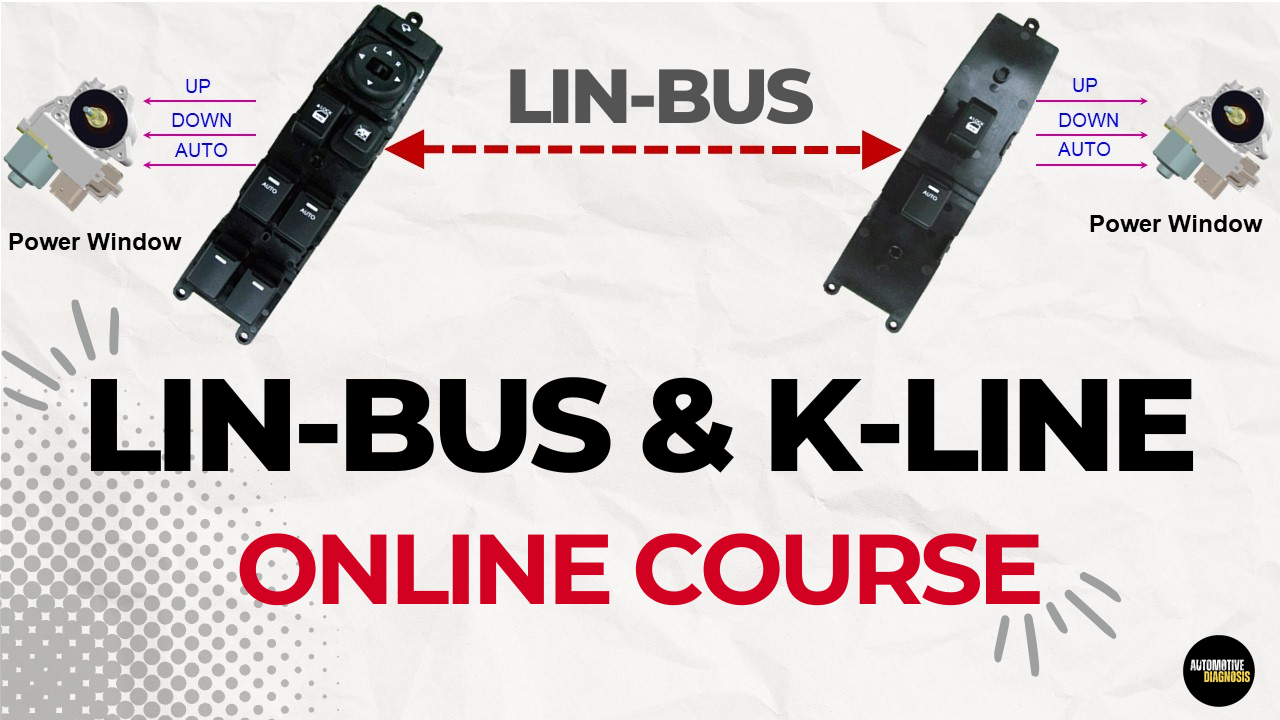
Amazing course with lots of lectures on the real cars, I learned a lot and will definitely take the other course you guys have for LIN bus and K-Line. Thank you







8 Responses
Amazing course with lots of lectures on the real cars, I learned a lot and will definitely take the other course you guys have for LIN bus and K-Line. Thank you
Hi my friend and thank you for taking this course.
It’s great that you enjoyed the course!
The best course on CAN Bus, I leaned a lot. Looking forward to the next course.
Thank you for taking this course and for your feedback.
Excellent course! The content is very well organized, and the video quality is outstanding. I learned a lot more than I expected.
The course provides a deep understanding of modern vehicle electronics and communication networks.
I love the practical approach. The instructor shows real-world faults and diagnostic procedures instead of just discussing theory.
Excellent course, highly recommended.