
P0011 Camshaft Position Timing Over-Advanced
P0011 Camshaft Position Timing Diagnostic Guide

General Description:
The CVVT (Continuously Variable Valve Timing) system is installed to the chain sprocket of the camshafts. This system controls the camshaft to provide optimal valve timing. The PCM controls the Oil Control Valve(OCV), based on the signals output from air flow, throttle position and engine coolant temperature. The CVVT controller regulates the camshaft angle using oil pressure through the OCV. As result, the relative position between the camshaft and the crankshaft becomes optimal, and the engine torque improves, fuel economy improves, exhaust emissions decrease under overall driving conditions.
Fault Code Description:
The deviation of the camshaft position from the target point is evaluated during stable driving condition. The PCM accumulates this deviation for a certain period and sets DTC P0011 when the accumulated deviation is too high. The target camshaft position is predetermined value depending on engine speed and throttle angle in the PCM.
Possible Causes:
- Oil leak
- Oil Control Valve
- CVVT Assembly
Diagram:
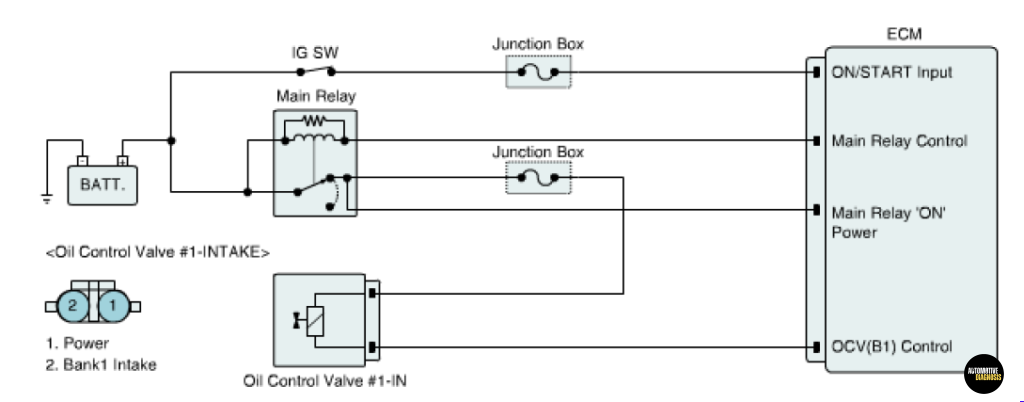
Component Test:
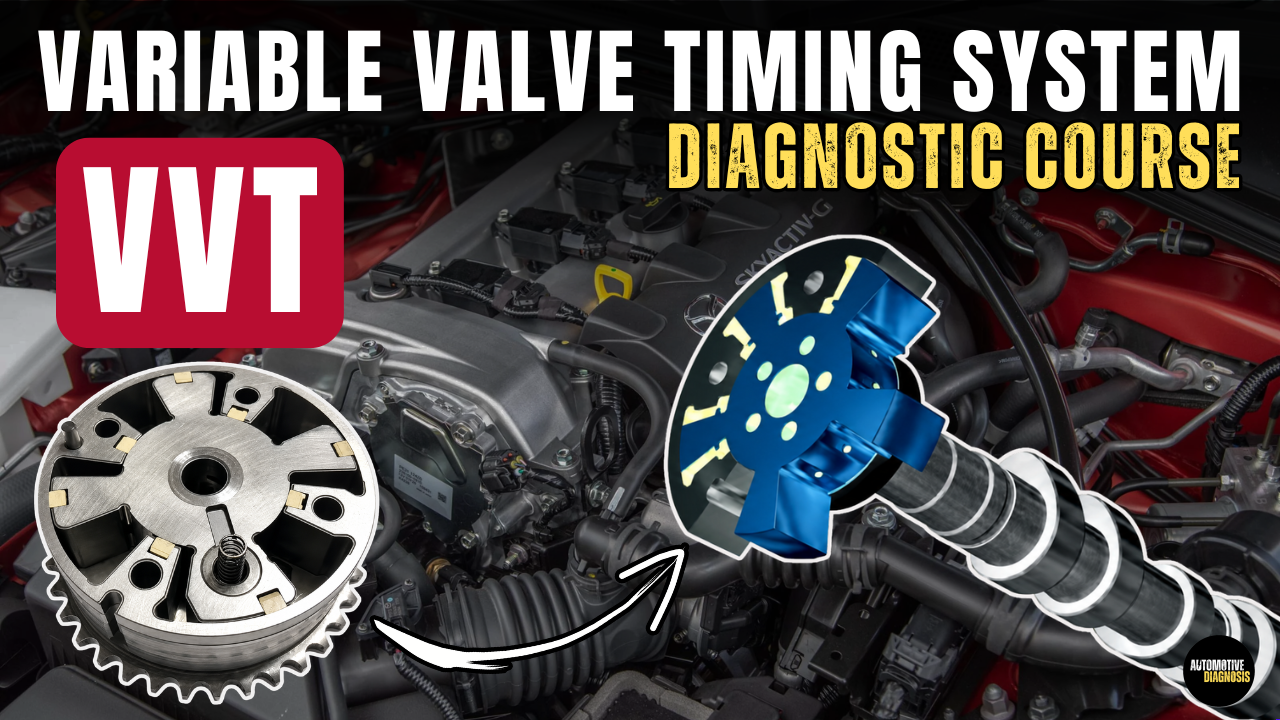
First, focus on checking the engine oil and replace it if necessary. After that, if you still have the fault, removing and checking the OCV (VVT Solenoid) can be very helpful. There might be a filter specifically for VVT, right before the OCV, checking and cleaning that filter can also fix this issue, here is a video about VVT components and VVT Filter:
Most of the time, only removing and cleaning the OCV can fix the issue, but checking the resistance is how we can test the OCV at the first place.
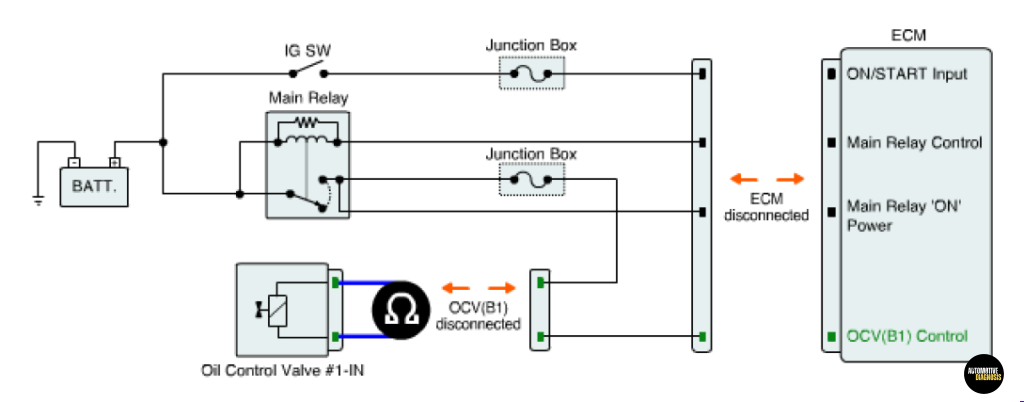
- Check resistance of OCV
1) Ignition “OFF”
2) Disconnect intake OCV connector.
3) Measure resistance between power and control
terminals of OCV. (Component Side)
Specifications : Approx. 6.9~7.9Ω at 20℃ (68℉)
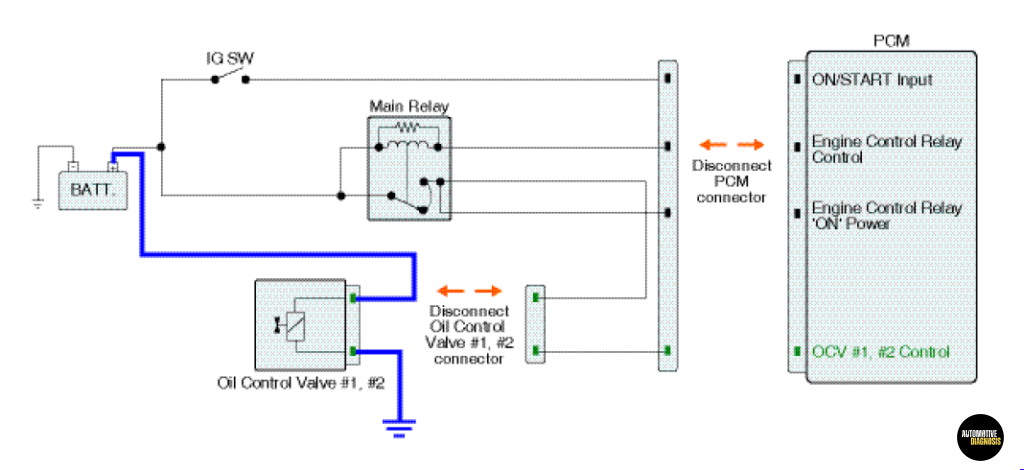
We can check the OCV operation with scan tool, or we can provide the battery voltage on it to check the activation. In this case, we must make sure that OCV valve moves when voltage is provided and you must hear the clinkinh sound.
Test the VVT Cam Phaser:
This fault can also be caused by a bad cam phaser. In some vehicles it can be tested by scan tool. You will need to start the car and at idle, after activating the OCV, VVT cam phaser will rotate making the engine rough, if engine condition doesn’t change, it means VVT is bad.
In many others, there is another way to test it and it’s by applying the air pressure through the VVT oil passages. The following video explains how to perform this test:





Comments are closed